By Kelly L. Harnett
Written for Science for Sustainability – BHSU Master of Science in Sustainability – 30 November 2022
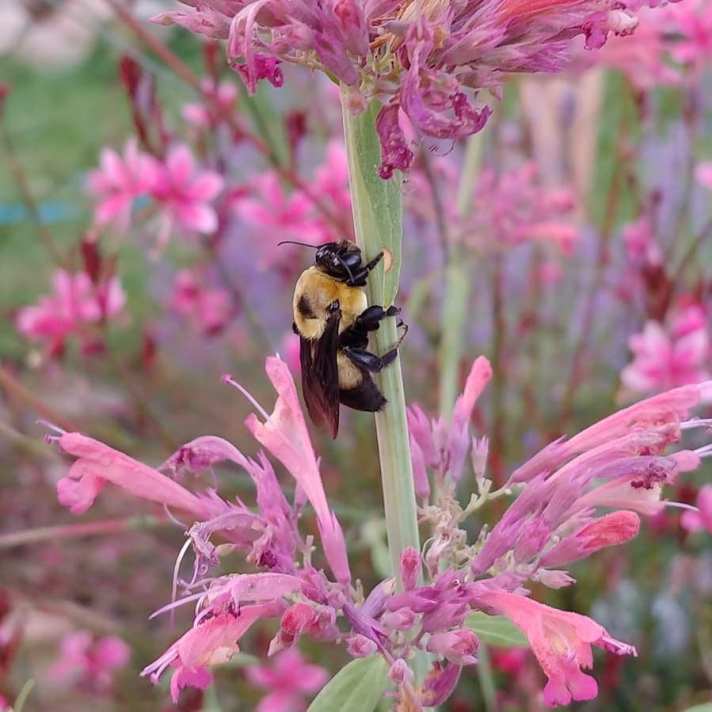
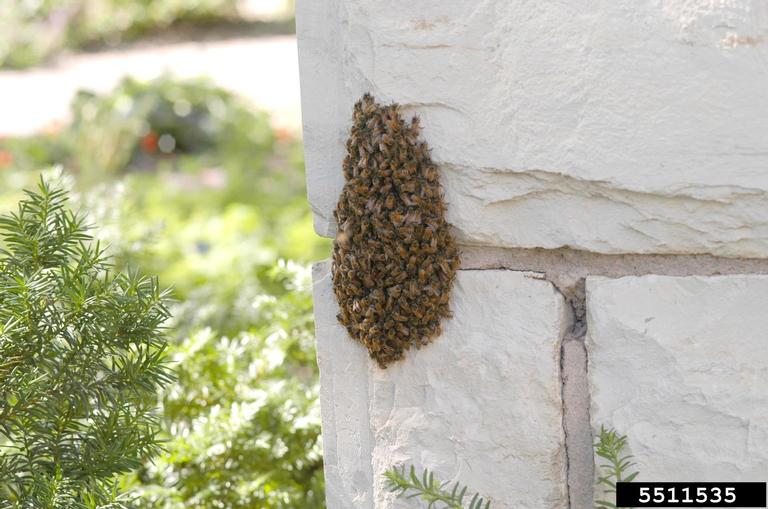
As Paige Embry so elegantly states in her opening sentence of Our Native Bees: North America’s Endangered Pollinators and the Fight to Save Them, “Native bees are the poor stepchild of the bee world.” Ask anyone in the United States to tell you about bees and they will ultimately tell you about the honey bee (Apis mellifera Linnaeus). Honey bees gain the majority of the attention due to Colony Collapse Disorder (CCD), their ability to make honey, and their added value to the economy as livestock. Native bees, however, are shown to be more important to retaining biodiversity, providing increased crop production and fruit size, and could lessen the effects on agricultural production due to honey bee losses (Rader et. al., 2013; Winfree, et. al. 2007; MacInnis and Forrest 2019; Meiners, et.al., 2019). There are approximately four thousand species of native bees found in North America and the honey bee is not one of them. Honey bees were brought over by early European settlers in the 17th century (USGS). Honey bees kept for honey production and crop pollination are considered managed bees. Feral bees are honey bees that escaped their managed confines. The feral bees that flourished in the wild are considered ‘naturalized’, not native.
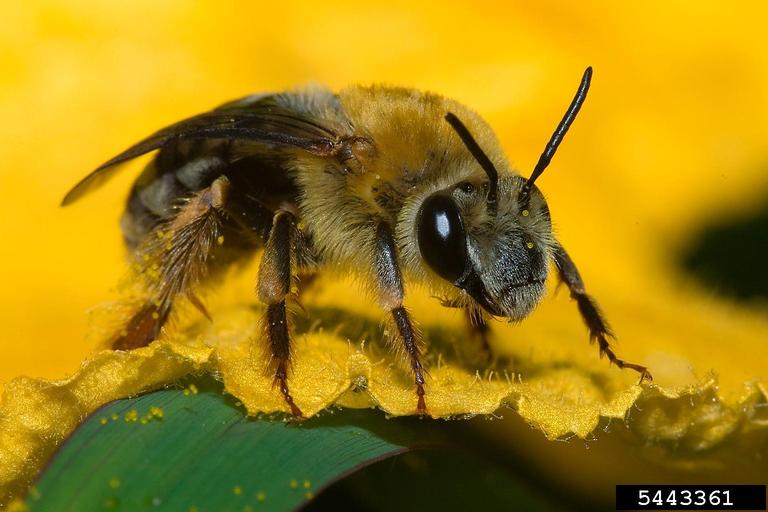
Unlike honey bees, who only work during ideal weather conditions and will visit any type of flowering plant that will allow them to collect pollen, our native bees (also known as wild bees) work hard in cooler temperatures and less ideal weather conditions (Embry 2018). More notable, about twenty to forty-five percent of native bees are considered specialists (USGS). This means they only collect pollen from one species (genus) of plant. For instance, the squash bee primarily feeds on pollen and nectar from squash, pumpkin, and other plants belonging to the gourd family. Just as our native bees are specialized servicing specific plants, many of our crops require certain bees to pollinate them (i.e., squash, tomato, blueberry, cranberry, alfalfa to name a few). Tomatoes cannot be pollinated by the honey bee. They require a special type of pollination called ‘buzz pollination’ to dislodge the pollen from the anthers. Buzz pollination is provided by two species of native bees, bumblebees (Bombus spp.) and mud bees (Anthophora urbana). And alfalfa requires pollination service from the Leafcutting Bee (Megachile spp.) (Cranshaw 2012). Native bees are vital to a range of wild and cultivated plants and crops providing an estimated $3 billion in pollination services and roughly thirty percent of food grown by the U.S. agricultural industry per year (Tuell et.al., 2008 and Meiners et. al., 2019).
About ninety percent of native bees found in North America are solitary, meaning they do not nest with other members of their species (Xerces Society) and have special habitat needs for food, shelter, and reproduction. Native bee populations are declining at alarming rates due to several factors – competition from the non-native honey bee and other non-native pollinators, increased use of pesticides, climate change, disease, and habitat change and fragmentation caused by urbanization. The population in the United States has grown forty-six percent since 1980 (USA Facts). With increased population growth comes increased urbanization and ever-increasing habitat loss and fragmentation. Urbanization has a direct impact on biodiversity on smaller land scales due to pollination efficiency and bee diversity (Tommasi et. al., 2022), it causes habitat loss, degradation and fragmentation, and modification of soils and land use (Elmqvist et. al., 2016). Changes in water availability, changes in plant nutrients due to the introduction of non-native plants in landscaping, increased air pollution, introduction of impervious man-made structure such as buildings, parking lots, and sidewalks, etc., and increased pesticide use in managed lawns are also related to urbanization (Elmqvist et. al., 2016; Ayers and Rehan 2021).
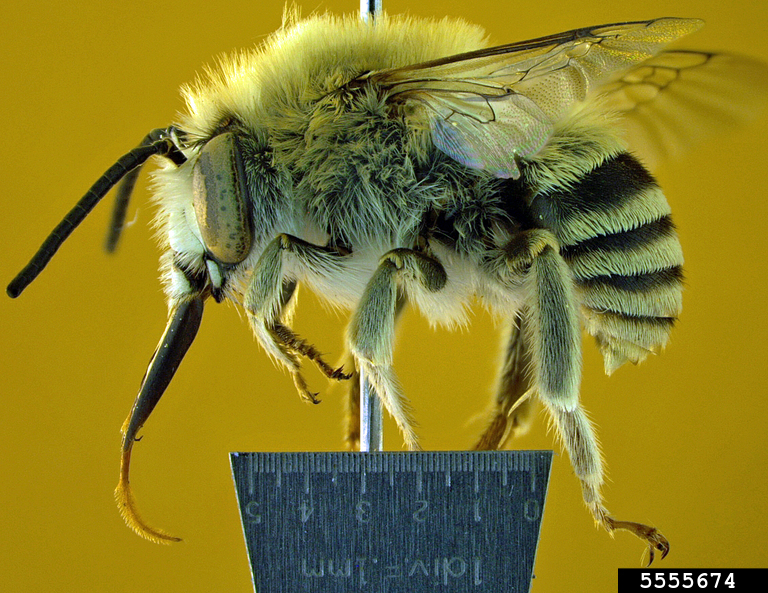
Habitat management for native pollinators in urban settings and around rural agricultural areas is an increasingly important endeavor city managers, farmers, and public land managers should incorporate into their management practices. While extensive research has been conducted on the managed honey bee, until recently, little was known about native bees and their importance to biodiversity and their value to the agricultural industry. Still much is unknown, however several recent studies show promise for protecting native bees by providing green spaces in urban areas while humans continue to dominate the land.
Native bees are often observed pollinating agricultural crops; however, their nesting sites, while still within foraging range, are often in a different location (Gathmann and Tscharntke 2002; Meiners et. al., 2019). Different native bee species require different resources in their habitat. For instance, some native bees are ground dwellers, while others utilize stems to lay their offspring in. My project will look at several different studies that show how providing green space for native bees and other pollinators in urban areas and providing connecting habitat between urban areas and agricultural areas can help protect native bee species and biodiversity by lessening the effects of habitat loss and fragmentation. Making sure these small patches of habitat contain the required materials, especially as it pertains to nesting sites, within the foraging range of each species will be crucial to the success of native bee management (Gathmann and Tscharntke 2002).

A study conducted by Meiners et. al., 2019, ‘Decades of native bee biodiversity surveys at Pinnacles National Park highlight the importance of monitoring natural areas over time’ shows that long term land management specific for native bee habitat can not only increase the number of species present, but also allow for species that had been thought extinct to an area to return. While large areas such as Pinnacles National Park are immensely important in maintaining native bee biodiversity and learning more about the different native bee species, it simply may not be possible to have a 26,000-acre habitat in several locations across the United States. What it can do, is help us understand the needs of native bees in order to provide the correct habitat in many smaller locations. Tommasi et. al., 2022 showed that it is important to try to keep fragmentation and disturbances to green areas at no more than an intermediate level. They showed no disturbance created more competition leading to less species richness whereas intermediate disturbance which allowed nonnative plants to thrive brought higher species richness by allowing less competition while high disturbance caused species richness to decline below the levels of non-disturbed areas.

A study conducted in Cleveland, Ohio (Turo and Gardiner 2021) that looked at 40 different vacant lots that had been assigned one of five habitat treatments showed native bee abundance to be greater in patches of land that were 15 acres and larger that were planted with a wildflower seed mix or with fine-fescue grass. While another study finds that smaller urban areas such as parks, gardens, and residential yards are utilized as connectivity habitat serving as corridors in between larger habitat areas (Ayers and Rehan 2021). With the decline of native bee species around the world and threats to the managed honey bee, it is increasingly important to know how to manage for native bees in urban settings and along edges of agricultural areas. By reviewing different study areas, sizes, and plant types along with monitoring the presence of native bees, one can better understand how to utilize the land they manage to aid in native bee conservation and reduce the negative impacts of habitat fragmentation.
References
Ayers, Anthony C., and Sandra M. Rehan. “Supporting Bees in Cities: How Bees Are Influenced by Local and Landscape Features.” Insects (Basel, Switzerland), vol. 12, no. 2, 2021, p. 128., doi:10.3390/insects12020128. Accessed 11 Oct 2022
Cranshaw, W. S. “Leafcutter Bees – 5.576 – Extension.” Colorado State University Extension, 2012, extension.colostate.edu/topic-areas/insects/leafcutter-bees-5-576/. Accessed 15 Oct 2022
Elmqvist, Thomas, et al. “Urbanization, Habitat Loss, Biodiversity Decline: Solution Pathways to Break the Cycle.” The Routledge Handbook of Urbanization and Global Environmental Change, by Karen Seto et al., London and New York: Routledge, 2016, pp. 139–151. Accessed 15 Oct 2022
Embry, Paige. Our Native Bees: North America’s Endangered Pollinators and the Fight to Save Them. Timber Press, 2018.
Gathmann, Achim, and Teja Tscharntke. “Foraging Ranges of Solitary Bees.” Journal of Animal Ecology, vol. 71, no. 5, 2002, pp. 757–764., doi:10.1046/j.1365-2656.2002.00641.x. Accessed 15 Oct 2022
MacInnis, Gail, and Jessica R. K. Forrest. “Pollination by Wild Bees Yields Larger Strawberries than Pollination by Honey Bees.” Journal of Applied Ecology, vol. 56, no. 4, 2019, pp. 824–832., doi:10.1111/1365-2664.13344. Accessed 15 Oct 2022
Meiners, Joan M., et al. “Decades of Native Bee Biodiversity Surveys at Pinnacles National Park Highlight the Importance of Monitoring Natural Areas over Time.” PLOS ONE, vol. 14, no. 1, 2019, doi:10.1371/journal.pone.0207566. Accessed 15 Oct 2022
Rader, Romina, et al. “Native Bees Buffer the Negative Impact of Climate Warming on Honey Bee Pollination of Watermelon Crops.” Global Change Biology, vol. 19, no. 10, 2013, pp. 3103–3110., doi:10.1111/gcb.12264.
Accessed 15 Oct 2022
Tommasi, Nicola, et al. “DNA Metabarcoding Unveils the Effects of Habitat Fragmentation on Pollinator Diversity, Plant‐Pollinator Interactions, and Pollination Efficiency in Maldive Islands.” Molecular Ecology, 2022, doi:10.1111/mec.16537. Accessed 16 Oct 2022
Tuell, Julianna K., et al. “Visitation by Wild and Managed Bees (Hymenoptera: Apoidea) to Eastern U.S. Native Plants for Use in Conservation Programs.” Environmental Entomology, vol. 37, no. 3, 2008, pp. 707–718., doi:10.1603/0046-225x(2008)37[707:vbwamb]2.0.co;2. Accessed 14 Oct 2022
Turo, Katherine J., and Mary M. Gardiner. “Effects of Urban Greenspace Configuration and Native Vegetation on Bee and Wasp Reproduction.” Conservation Biology, vol. 35, no. 6, 2021, pp. 1755–1765., doi:10.1111/cobi.13753. Accessed 11 Oct 2022
“US Population by Year, Race, Age, Ethnicity, & More.” USAFacts, July 2022, usafacts.org/data/topics/people-society/population-and-demographics/our-changing-population?endDate=2021-01-01&startDate=1980-01-01. Accessed 15 Oct 2022
“What Is the Role of Native Bees in the United States?” What Is the Role of Native Bees in the United States? | U.S. Geological Survey, http://www.usgs.gov/faqs/what-role-native-bees-united-states#:~:text=Of%20approximately%204%2C000%20native%20bee%20species%20in%20the,that%20plant%20is%20removed%2C%20the%20bee%20goes%20away. Accessed 14 Oct 2022
“Wild Bee Conservation.” Xerces Society, 2022, xerces.org/endangered-species/wild-bees. Accessed 15 Oct 2022
Winfree, Rachael, et al. “Native Bees Provide Insurance against Ongoing Honey Bee Losses.” Ecology Letters, vol. 10, no. 11, 2007, pp. 1105–1113., doi:10.1111/j.1461-0248.2007.01110. Accessed 15 Oct 2022

 Beautify Spearfish
You must be logged in to post a comment.